The interpreters somewhere else. The hall hears them as if they were in the room.
With remote interpreting over Zoom or Teams you skip the travel and the booth, while delegates in the hall get the interpreting on their own headset channels. Live subtitles can be added.
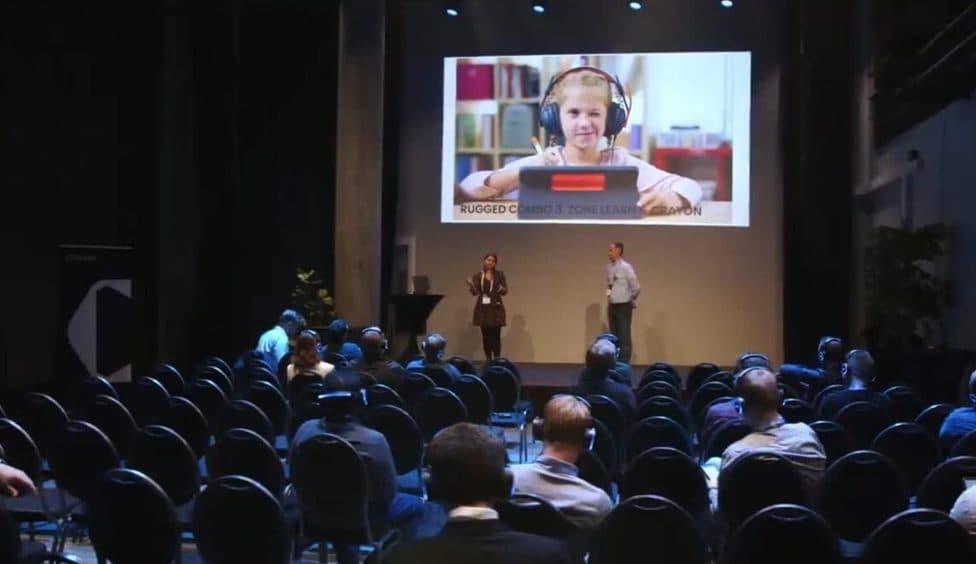
Hybrid interpreting means the interpreters can sit somewhere else, while the hall hears them in headsets. It is also called RSI, remote simultaneous interpreting.
The audio has to leave the mixing desk for Zoom or Teams, not a microphone that takes the room with it. The interpreted audio comes back on its own channels.
How the audio travels
- 01Microphone in the hall
- 02Mixing desk
- 03Zoom or Teams
- 04Interpreter
- 05Language channel in the headset
A physical booth is the better choice when the day is long, when several languages must be heard at once, when the interpreters need to see the hall, or when what is said should stay in the room. IR stops at the wall. A platform does not do that on its own.
What is included
- An audio path from the mixing desk to Zoom or Teams
- Interpreted audio back on its own headset channels
- A technician watching the path while the meeting runs
- Live subtitles when that is agreed
Interpreters on Zoom, the hall on its own channels
Delegates in the hall heard the interpreters in headsets without the interpreters sitting in the venue.
Questions
Is hybrid the same as putting a room microphone on Zoom?
No. Audio to the interpreters should come from the mixing desk, so they hear the person who has the floor and not the room. The interpreted audio is returned on channels in the headsets.
Tell us about the meeting
Place, date, languages and roughly how many delegates are enough to start.